
Health · Hormone Balance · Women’s Health
Red Light Therapy: The Science of Healing, Longevity, and Cellular Regeneration
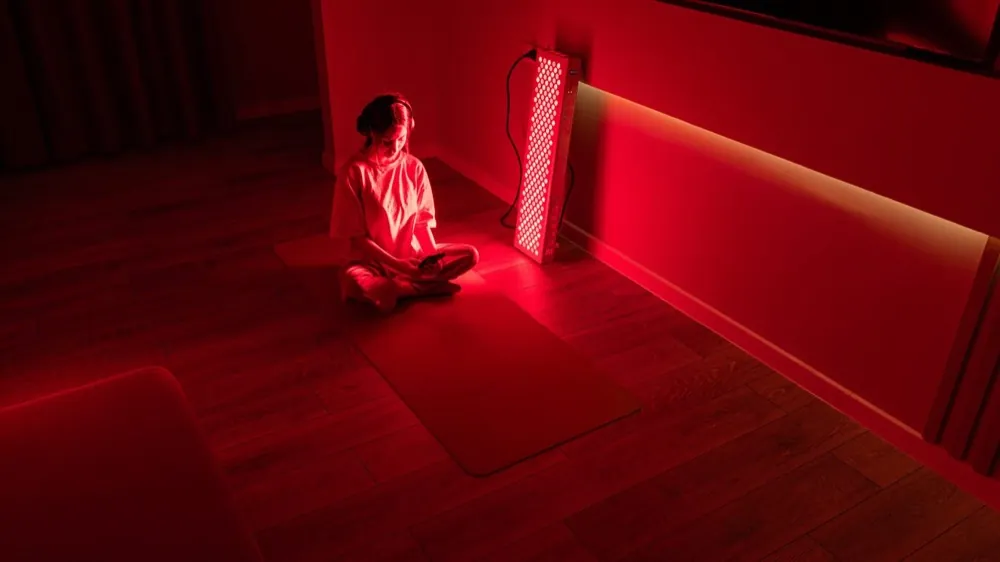
Red Light Therapy: The Science of Healing, Longevity, and Cellular Regeneration
Why Red Light Therapy Is More Than Just Another Wellness Trend
From elite athletes and longevity clinics to dermatology offices and wellness centers, red light therapy has rapidly become one of the most sought-after technologies in modern health optimization.
But unlike many wellness trends that come and go, red light therapy is supported by decades of scientific research. In fact, what many people call “red light therapy” is scientifically known as photobiomodulation (PBM), a therapeutic approach that uses specific wavelengths of red and near-infrared light to influence cellular function and support healing at the mitochondrial level.
Today, researchers are investigating photobiomodulation for skin rejuvenation, wound healing, inflammation reduction, muscle recovery, cognitive performance, metabolic health, healthy aging, and even neurological disorders. Recent umbrella reviews and systematic reviews continue to demonstrate promising outcomes across multiple health domains. (Springer)
So, what exactly happens when light meets the body?
Let’s explore the science.
What Is Red Light Therapy?
Red light therapy uses specific wavelengths of light, most commonly
- Red Light: 620–700 nm
- Near-Infrared Light (NIR): 700–1100 nm
These wavelengths penetrate the skin and underlying tissues without causing heat damage.
Unlike UV light, which can damage DNA and accelerate aging, red and near-infrared light interact with cells in a beneficial way by stimulating mitochondrial function. This process is known as photobiomodulation. (MDPI)
The Mitochondria Connection: Why Light Matters
Every cell in your body contains tiny energy-producing structures called mitochondria.
These cellular powerhouses generate ATP (adenosine triphosphate), the primary energy currency that powers nearly every biological process:
- Tissue repair
- Collagen production
- Hormone synthesis
- Detoxification
- Muscle recovery
- Brain function
- Immune regulation
One of the key targets of red and near-infrared light appears to be an enzyme within mitochondria called cytochrome c oxidase.
When exposed to specific wavelengths of light, this enzyme becomes more efficient, allowing cells to produce more ATP while simultaneously reducing oxidative stress and improving cellular signaling. (MDPI)
Think of it as charging your body’s biological batteries.
Red Light Therapy and Healthy Aging
One of the most exciting applications of photobiomodulation is its potential role in healthy aging.
Aging is strongly associated with
- Mitochondrial dysfunction
- Increased inflammation
- Oxidative stress
- Reduced collagen production
- Impaired cellular repair
Research suggests that photobiomodulation may help address several of these hallmarks simultaneously by improving mitochondrial efficiency and supporting cellular resilience. (Springer)
This is why red light therapy has become a popular tool within the longevity and biohacking communities.
While it is not a magic anti-aging solution, it may help support the body’s natural repair mechanisms, potentially contributing to healthier aging over time.
Red Light Therapy for Skin Health and Collagen Production
Perhaps the most well-known benefit of red light therapy is its impact on skin health.
Research has shown that photobiomodulation may
- Stimulate collagen synthesis
- Improve skin elasticity
- Reduce the appearance of fine lines
- Enhance wound healing
- Improve skin texture
- Reduce inflammation associated with acne and rosacea
- Support overall skin rejuvenation
Several dermatological reviews have highlighted the ability of red light to stimulate fibroblasts, the cells responsible for producing collagen and elastin. (MDPI)
Collagen production naturally declines with age, beginning as early as our twenties. By stimulating fibroblast activity, red light therapy may help support healthier, firmer, and more resilient skin.
For this reason, many practitioners now integrate red light therapy into facial treatments, microneedling protocols, and regenerative aesthetic procedures.
The Anti-Inflammatory Effects of Red Light Therapy
Chronic inflammation is increasingly recognized as one of the major drivers of modern disease.
Persistent inflammation has been linked to
- Cardiovascular disease
- Diabetes
- Neurodegeneration
- Autoimmune conditions
- Accelerated aging
- Chronic pain
Emerging evidence suggests that photobiomodulation has significant immunomodulatory effects, meaning it can help regulate inflammatory pathways rather than simply suppress them. (Springer)
Researchers have observed reductions in inflammatory markers and improvements in tissue healing following red light exposure.
This ability to support balanced immune function may help explain the wide range of conditions that appear to respond positively to photobiomodulation.
Red Light Therapy for Recovery and Athletic Performance
Athletes have embraced red light therapy for one simple reason
Recovery drives performance.
Studies suggest that photobiomodulation may help
- Reduce muscle soreness
- Improve muscle recovery
- Support tissue repair
- Reduce exercise-induced oxidative stress
- Enhance physical performance
By improving mitochondrial efficiency and reducing inflammation, red light therapy may help muscles recover more effectively after intense training.
This has made full-body red light panels increasingly popular among professional athletes, fitness enthusiasts, and longevity-focused individuals.
Brain Health and Cognitive Performance
One of the fastest-growing areas of photobiomodulation research involves the brain.
Researchers are currently investigating transcranial photobiomodulation, a technique that applies light to the scalp to influence brain tissue.
Emerging evidence suggests potential benefits in
- Cognitive function
- Attention
- Memory
- Mood regulation
- Neuroprotection
Several systematic reviews have highlighted promising findings in neurological and neuropsychiatric disorders, although larger clinical trials are still needed. (SpringerLink)
The proposed mechanisms include
- Increased cerebral blood flow
- Enhanced mitochondrial function
- Reduced neuroinflammation
- Improved neuronal resilience
While this field remains in its early stages, it represents one of the most exciting frontiers in regenerative medicine.
Red Light Therapy and Metabolic Health
Another emerging area of interest is metabolic health.
Preliminary research suggests that photobiomodulation may influence
- Insulin sensitivity
- Inflammation
- Body composition
- Cellular energy metabolism
A recent meta-analysis examining obesity-related outcomes reported improvements in several metabolic and inflammatory markers following photobiomodulation interventions. (SpringerLink)
Although more research is needed, these findings align with what we know about mitochondrial health and metabolic resilience.
Since mitochondria play a central role in glucose regulation and energy production, improving mitochondrial function may have far-reaching effects throughout the body.
What Does a Typical Session Feel Like?
One of the reasons patients love red light therapy is that it is
- Non-invasive
- Painless
- Drug-free
- Relaxing
Most people describe the experience as sitting or standing in front of a warm, gentle light.
There is no downtime.
Unlike aggressive treatments that rely on creating controlled injury, photobiomodulation works by supporting the body’s innate healing mechanisms.
How Often Should You Use Red Light Therapy?
Consistency matters.
Most clinical protocols involve
- 3–5 sessions per week
- 10–20 minutes per treatment area
- Several weeks of consistent use
The benefits tend to accumulate over time.
Just as one workout does not transform your fitness, one red light session is unlikely to create dramatic changes.
Photobiomodulation works best when viewed as a long-term wellness practice.
Is Red Light Therapy Safe?
Current evidence suggests that red light therapy is generally safe when used appropriately. Unlike ultraviolet light, red and near-infrared wavelengths do not damage DNA and are not associated with skin cancer risk. (MDPI)
However, proper protocols remain important.
Individuals should
- Follow manufacturer guidelines
- Use clinically validated devices
- Protect the eyes when indicated
- Consult healthcare professionals for medical conditions
As with any health intervention, quality matters.
Not all devices are created equal.
Wavelength accuracy, irradiance, treatment distance, and treatment duration can significantly influence outcomes.
The Future of Light Medicine
We are entering an era where medicine is increasingly focused on supporting the body’s own regenerative capacity.
Photobiomodulation represents a powerful example of this shift.
Rather than masking symptoms, red light therapy works at the cellular level, helping optimize energy production, repair mechanisms, and resilience.
The growing body of evidence suggests that this simple intervention may have applications far beyond aesthetics - from healthy aging and metabolic health to brain function and recovery.
While more large-scale clinical trials are still needed, the science continues to move in an exciting direction.
Perhaps the greatest promise of red light therapy is that it reminds us of something profound:
Healing does not always require more intervention.
Sometimes, it begins with giving the body the energy it needs to do what it was designed to do.
References
- International Journal of Molecular Sciences, 2024: Comprehensive Review on Photobiomodulation and Skin Health. (MDPI)
- Lasers in Medical Science, 2025: Immunomodulatory Effects of Photobiomodulation. (Springer)
- Systematic Reviews, 2025: Umbrella Review of Randomized Clinical Trials on Photobiomodulation. (Springer)
- BMC Neurology, 2024: Photobiomodulation and Neurological Disorders. (SpringerLink)
- Journal of NeuroEngineering and Rehabilitation, 2024: Brain Photobiomodulation Review. (Springer)
- BMC Complementary Medicine and Therapies, 2025: Metabolic Health and Obesity Outcomes. (SpringerLink)